
How this started
A gap between the brochure and the roof
The program did not begin as a business plan. It began with a pile of quotes from different installers that all described different systems, different prices, and different promises, with no obvious way to tell which one made sense.

The first year
Kitchen-table workshops
The earliest version of this program was informal. A handful of neighbors in Bucharest who were each independently trying to decide whether solar made sense for their home started meeting to compare notes, quotes, and confusion. None of them had a technical background. All of them had questions an installer's sales visit had not fully answered.
Those early sessions were run around a kitchen table with a whiteboard and printouts of three competing proposals. The goal was never to pick a winner among installers. It was to understand enough about how photovoltaic systems work that each person could evaluate their own options without relying entirely on the person trying to sell them something.
What became clear
The confusion was structural, not personal
It turned out the difficulty was not that any one homeowner was uninformed. It was that almost nowhere existed a resource explaining solar performance and installer evaluation without also trying to close a sale by the end of the conversation.
Installers have to sell
That is simply their job, and a reasonable one. But it means the information they provide is filtered through the lens of closing a deal, not necessarily through the lens of your specific curiosity.
Manufacturer material assumes ideal conditions
Panel specification sheets describe performance under standardized laboratory conditions that rarely match a real rooftop in a real Romanian summer or winter.
Online forums vary wildly
Useful information exists scattered across forums and comment sections, but it is inconsistent, sometimes outdated, and hard to verify against your own situation.
Nobody was teaching, just informing
What seemed to be missing was a structured sequence: a place to actually learn the subject in order, rather than pick up fragments as questions came up.
Turning it into a program
From informal to structured, deliberately slowly
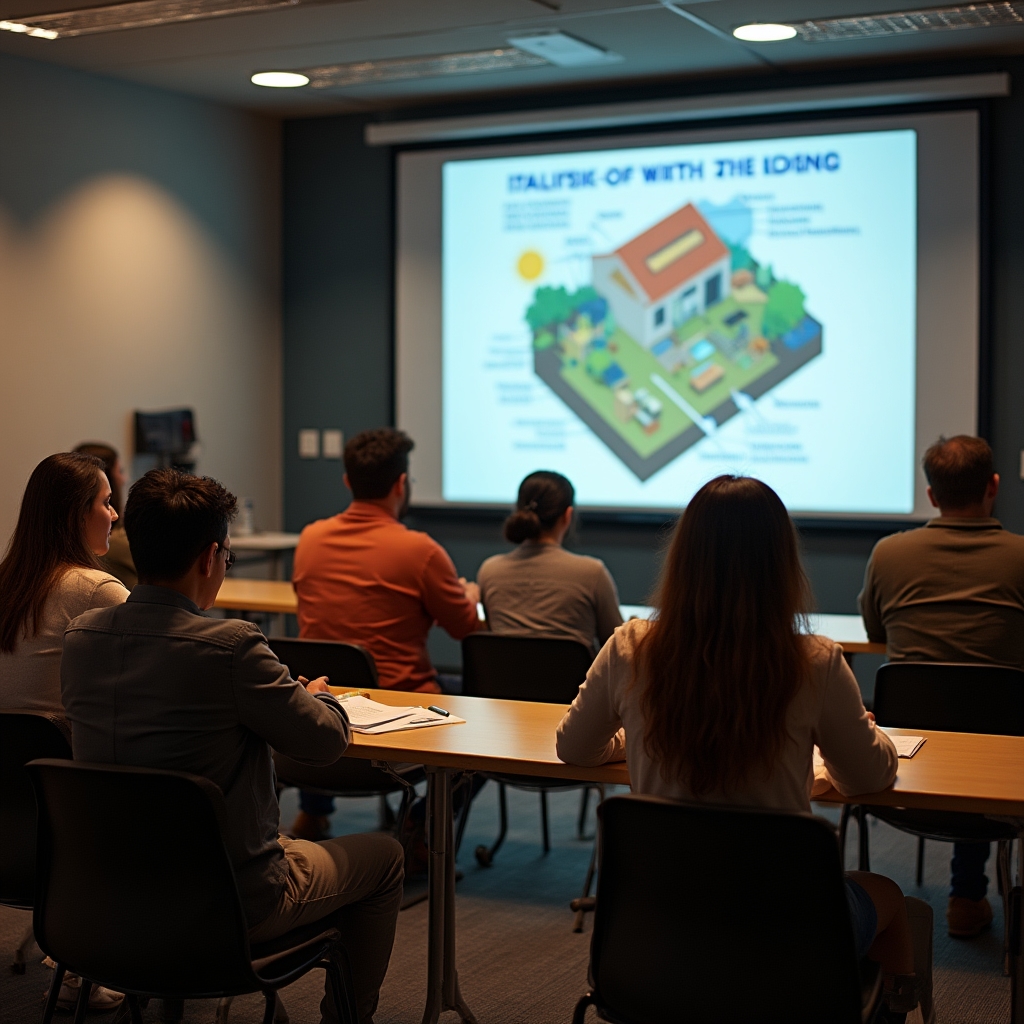
Over roughly two years, the informal sessions turned into a written curriculum. Each topic that had come up repeatedly, orientation, shading, inverter types, warranty terms, financing basics, became its own module with its own set of visuals and a clear starting and ending point.
The decision to never sell equipment or take commission from installers was made early and has not changed. It is the one rule the program has held onto through every revision of the curriculum, because it is the reason people trust the content enough to bring their real, specific questions.
See what the program looks like today
The curriculum has grown since those first kitchen-table sessions, but the intent behind it has stayed the same.
Browse Training Modules